
al-Ghazzawiyya
Updated: Aug 10
The village of Al-Ghazawiyya was spread across a wide area in the Baysan Valley, west of the Jordan River and near the Baysan–Jericho main road. The inhabitants belonged to the Bedouin tribe of Al-Ghazawiyya, and together with the Bashatweh and Al-Suqur tribes, they made up the majority of the valley’s population. They settled in the area due to its abundant water sources and fertile soil. All residents were Muslims, and they lived in both permanent homes and tents.
Agriculture—particularly grain cultivation—and livestock herding were the primary sources of livelihood for the Ghazawiyya Arabs. Their crops, which included grains, as well as fruits and vegetables, were either irrigated or rain-fed. In the agricultural year 1944/1945, a total of 13 dunums was planted with citrus and bananas, 5,185 dunums with cereals, and 34 dunums were irrigated or used for orchards.
The villagers herded their animals in the Jordan Valley during winter, and moved them to the mountain highlands during summer. The presence of archaeological sites such as Tall al-Barta (200213) to the north of the village, Tall al-Hisn (197212) to the west, and Tall al-Maliha (199211) to the southwest indicates that the area has long been inhabited. Excavations at Tall al-Hisn uncovered evidence of continuous habitation from the third millennium BCE to the eighth century CE, when an Arab village existed at the site.
Occupation and Depopulation
The village fell into Israeli hands on May 20, 1948, about one week after the Golani Brigade occupied the nearby city of Baysan. According to Israeli historian Benny Morris, who refers to the village as “Arab al-Ghazawiyya”, the residents may have fled in the wake of Baysan’s fall.
The Haganah’s official account of the Baysan Operation states that the Fourth Battalion of the Golani Brigade “cleansed the entire Baysan Valley of Bedouins.”
The Village Today
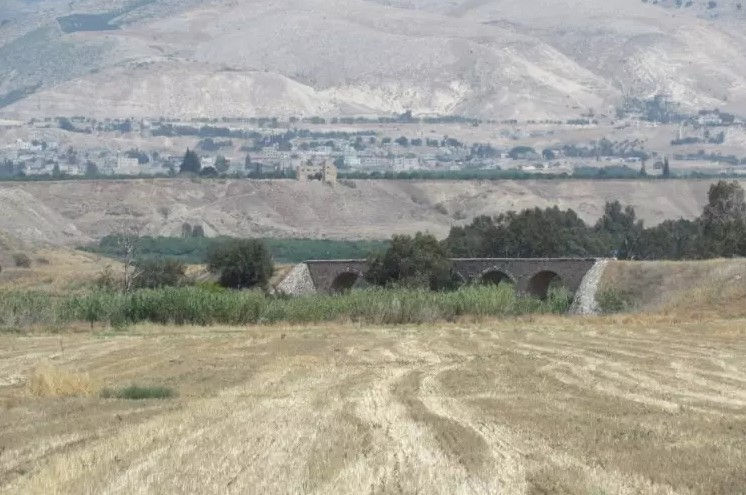
No physical traces remain to indicate that the village once existed. The land has been leveled and is now fully cultivated by Israeli farmers.
Zionist Settlements on Village Lands
No new Israeli settlements were established directly on the village’s lands after its depopulation. However, the area formerly encompassing the village is now part of a region that contains several pre-1948 settlements. The most notable among them is Ma'oz Haim (202211), established in 1937 on a hill along the road connecting Baysan and the Sheikh Hussein Bridge.
Another is Neve Eitan (200211), founded in 1938. Both settlements were built on lands that were traditionally part of the village of Al-Ghazawiyya.


Comments