
Abu Shusha
Updated: Jun 23
The village was situated on a low hilltop overlooking the Sea of Galilee and was located at a short distance from the shore, connected by a neighboring road. When the American biblical scholar Edward Robinson passed through in 1838, he observed only the remains of a few stone houses and shrines. Nevertheless, the Bedouin tribe of the Ghawarna cultivated much of the fertile land extending below the village. The Samakiya Bedouins also used some of Ghuwayr Abu Shusha’s buildings as storage facilities. The inhabitants relied on several springs for drinking water. They were Muslims whose livelihood depended primarily on agriculture. Orange orchards covering 200 dunams to the west, north, and south of the village were owned by Jews. The village residents themselves cultivated vegetables and grains in the eastern portion of the village lands.
In 1944/1945, the cultivated lands consisted of 21 dunams for citrus and bananas, 1,848 dunams for grains, and 1,377 dunams irrigated or used as orchards. The nearby ruins of Abu Shusha included water-powered mills located near Wadi al-Riyada.
Occupation and Ethnic Cleansing
The newspaper Falastin reported that at 3:00 a.m. on January 3, 1948, forty Jewish militia members raided Ghuwayr Abu Shusha. The village residents resisted, resulting in the death of the Mukhtar’s son and an unnamed woman, while three attackers were also killed. Israeli historian Benny Morris asserts that “panic” led to the village’s depopulation three months later following the fall of Tiberias and the surrounding area. Morris further states that the evacuation of Ghuwayr Abu Shusha weakened the morale of Safad’s residents and hastened its fall.
Morris suggests the evacuation occurred in two waves on April 21 and 28, 1948, but does not mention a direct military assault on the village. Some villagers fled to the Galilean village of Rama. When Israeli forces occupied Rama at the end of October, they ordered the villagers to relocate again, this time crossing into Lebanon.
In interviews conducted a generation later, villagers recalled a military attack on their village. They stated they were not overly concerned by the fall of Tiberias and had been prepared to defend Ghuwayr Abu Shusha. However, when the Arab Salvation Army supplied arms, they decided to evacuate women, elderly, and children to Rama, leaving 48 armed men in the village equipped with 35-40 rifles.
At dawn on April 24, while the armed men were gathering west of the village, the Palmach launched a surprise attack on Ghuwayr Abu Shusha. The villagers were ordered not to resist, as there was no longer anyone requiring protection in the village. The displaced inhabitants remained in Rama until it too fell, often returning to the village to retrieve belongings. Eventually, many were forced to settle in the Ain al-Hilweh refugee camp in southern Lebanon, where interviews were conducted in 1973.
According to Morris, the state confiscated village lands and leased them in the summer or early autumn of 1949 to two neighboring Jewish settlements. Matzad (197249) lies approximately two kilometers east of the village site. The lease duration was only one year, and Morris does not clarify whether longer leases or land ownership titles were subsequently granted.
The Village Today
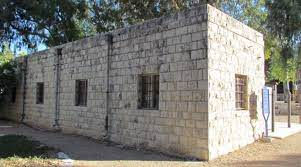
The site is dominated by wild plants and thorns, including Christ’s thorn and cactus plants. Among the stone rubble and some olive trees remain the shrine of Sheikh Muhammad and the remains of a mill. In the lowlands, citrus and banana cultivation persists, while the higher elevations are used by Israelis as grazing land for livestock.
Zionist Settlements on Village Lands
The Zionists established the settlement of Einosar (199250) in 1937 to the east of the village on land traditionally belonging to it. The settlement of Lakhmin (196252), founded in 1982 on village lands, is located approximately one kilometer northwest of the village site.


Comments