
al-Tira
Updated: 7 days ago
The village was situated on the lower western slopes of Mount Carmel, overlooking the coastal plain. A secondary northwest road connected it to the main coastal road. Al-Tira was one of the most important villages in the Haifa district; it was the most populous and the second-largest village in the district (after Ijzim) in terms of area. The Crusaders named it "San Johan de Tir." In 1996, Al-Tira was a village in the Shafa subdistrict (Lajjun district), with a population of 286 people. They paid taxes on various produce and exploited resources such as goats, flax fields, and vineyards.

In the late 19th century, Al-Tira was a village with houses built from stone and mud, located on the slope of a mountain characterized by nearby hills with caves. Olive groves surrounded it, and its population was approximately 1,200. They cultivated 60 feddans (one feddan equals 100–250 dunams). The village’s economy deteriorated after 1872 due to the heavy burden of Ottoman compulsory conscription but later recovered and prospered. By the mid-1940s, its inhabitants—5,240 Muslims and 10 Christians—had built clustered stone houses, and the village was cross-shaped. It contained two elementary schools, one for boys and the other for girls. Its lands included several springs, and its economy depended on grains, vegetables, and fruits.
By 1945, Al-Tira’s olive and olive oil production exceeded that of any other village in the Haifa district. The village had three mechanical olive presses and had also planted many mulberry trees, leading to it being called "Almond Tira" in 1944–1945. The total land area amounted to 16,219 dunams allocated for grains and 3,543 dunams irrigated or used for orchards. Some residents also raised poultry. The lands of Al-Tira contained five ruins, including Khirbat al-Dira (147245), which includes remains of the Monastery of Saint Brocardus, some caves formerly inhabited, and a vaulted stone tunnel. To the south of the village was an archaeological site dating to the Middle Paleolithic period, which was later excavated.
Occupation and Ethnic Cleansing of the Village

On December 12, 1947, the Irgun group bombed Al-Tira during the first round of fighting. This attack took place in “Abd al-Hanukat” among the Jews and was accompanied by six other terrorist attacks by the same group in different parts of Palestine. According to The History of the Haganah, the raid resulted in 13 deaths in Al-Tira. The newspaper Palestine revealed that children and elderly were among the victims. The attack reportedly approached an isolated house on the village’s outskirts, which was bombed, after which the assailants fired on homes before fleeing through olive groves to a waiting truck. The New York Times confirmed the attack, reporting ten wounded, thirteen dead, one house destroyed, and several others damaged.

In the following weeks, the village endured smaller attacks. On February 5, 1948, an attack lasted an hour and thirty minutes but caused no casualties, according to a British official report stating the village gave no response. On the early morning of April 22, a large attack targeted Al-Tira alongside the Haganah’s assault on Haifa. The apparent objective was to prevent Arab reinforcements from reaching Haifa, but the first attempt to seize the village occurred days after Haifa’s fall. Israeli historian Benny Morris notes the attack began at 1:40 AM on April 25, involving mortars and machine guns. A British unit quickly arrived, halting the fighting. Morris claims the British helped evacuate some women and children to safety. The attack resumed the next morning after the British left and continued until another British unit arrived later in the day to organize a second evacuation. The New York Times reported the village was "heavily shelled with mortars," with Haganah claiming Al-Tira was "a major Arab base."

On May 5, the Haganah made a third effort to relocate more residents to safety, transferring about 600 people to Jenin and Nablus, according to Morris. The attacks continued for approximately a week. On May 13, the Haganah’s Alexander-Wayne Brigade launched a failed attack. According to The History of the Haganah, the failure resulted primarily from a lack of accurate intelligence on the village’s defensive arrangements. This led to the cancellation of the planned Qalqilya occupation, as outlined in Plan Dalet.
According to The History of the Haganah, the village finally fell on July 16 during the “Ten Days” battles between the two wars. The source notes that Al-Tira’s occupation, along with other villages in the Haifa district such as Kafr Lam and Sarafand, was significant as it marked the first use of naval gunfire to support ground forces. The attack on Al-Tira was part of a broader naval operation that simultaneously led to the occupation of Kafr Umm and Sarafand. The warship Eilat bombarded the village before ground forces moved in. The remaining villagers, who had resisted under siege for about two months, were mostly expelled to the Jenin-Nablus-Tulkarm triangle or detained in prisoner-of-war camps, according to Benny Morris.
Some residents apparently fled to the nearby village of Ein Ghazal. The Secretary-General of the Arab League reported that 28 refugees from Al-Tira were burned alive there in late July. However, UN mediator Count Folke Bernadotte stated that a UN observer visited the area on July 28 and found “no evidence to support the claim of a massacre.” Morris adds that the burned bodies found in Ein Ghazal were in an advanced state of decomposition and were subsequently burned by Israeli soldiers. He further notes there is no evidence indicating where these people came from or how they died.
The Village Today

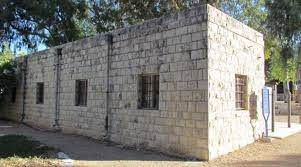
An Israeli settlement partially occupies the village site. Some houses, such as the House of the Wolves’ Newlyweds, remain visible. The cemetery is in a miserable state of neglect and contains several broken stone markers. Remains of two combined tombs still exist. The school building is used by Israeli and Arab pupils, including Jews. Some forests and residences spread over the mountainous section of the surrounding lands, while the plain is used for agriculture.
Zionist Settlements on the Village Lands
The Zionists established the settlement of Hogrim (146239) in June 1948, south of the village site. One year later, two settlements were established: Tirat Carmel (147240) and Ma’adam (146237)—the first on the village site and the second slightly further on village lands. In 1952, the settlement of Kfar Alim (147241) was built on village land, followed in 1953 by Beit Tzvi (147236).


Comments