
Givatayim Settlement
Updated: Sep 7
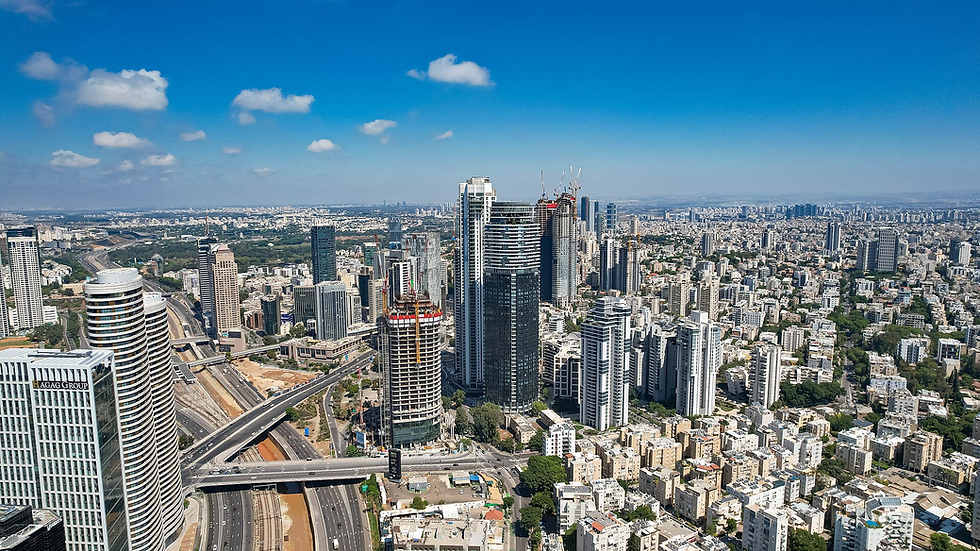
Givatayim is a settlement classified as a city within what is known as "Israel," located east of Tel Aviv, and forms part of the Gush Dan urban area. It was founded in 1922 by pioneers of the Second Aliyah.
The city's name derives from the "hills" (givatayim means "two hills") on which it was built, namely Borochov Hill and Kozlovsky Hill. Kozlovsky is the highest hill in the Gush Dan area, at 85 meters above sea level. During the 1930s, the settlement expanded to include, today, four hills: Borochov, Kozlovsky, Poalei HaRakevet (railway workers), and Rambam.
The modern settlement was founded on 2 April 1922 by a group of 22 pioneers of the Second Aliyah, led by David Shneiderman. The group purchased 300 dunams of land on the outskirts of Tel Aviv, on which the Borochov neighborhood was established, the country's first workers' neighborhood, named after Ber Borochov, founder of the Poalei Zion party. Later, 70 additional families joined the group, receiving smaller plots of land. The land was purchased with the settlers' own savings, then voluntarily donated to the Jewish National Fund, which organized Zionist settlement at the time, in keeping with the founders' socialist ideals.
The Borochov neighborhood is considered one of the earliest innovations of the early Jewish settlement movement, including the establishment of the first cooperative grocery store ("Tzarchania" – "The Consumer"), which continued to operate at the same site until the 1980s.
Over time, other neighborhoods developed, such as Shinkin (1936, named after Menachem Sheinkin), Givat Rambam (1933, named after Moses Maimonides), Kiryat Yosef (1934, named after a biblical figure), and Arlozorov (1936, named after Chaim Arlosoroff).
All these neighborhoods were merged to form a local council in August 1942. The settlement was also built on the lands of the depopulated Palestinian village of al-Khayriyya in the Jaffa district, in April 1948. Its population in 2022 was about 61,924 people.
Sources:Due to the scarcity of Arabic sources, the following Hebrew sources were relied upon:
The settlement's official website (Hebrew)
Israeli Central Bureau of Statistics
Information on the village of al-Khayriyya from the Palestine Remembered website.
Comments