
Ramat Pinchas Settlement
Updated: Sep 13

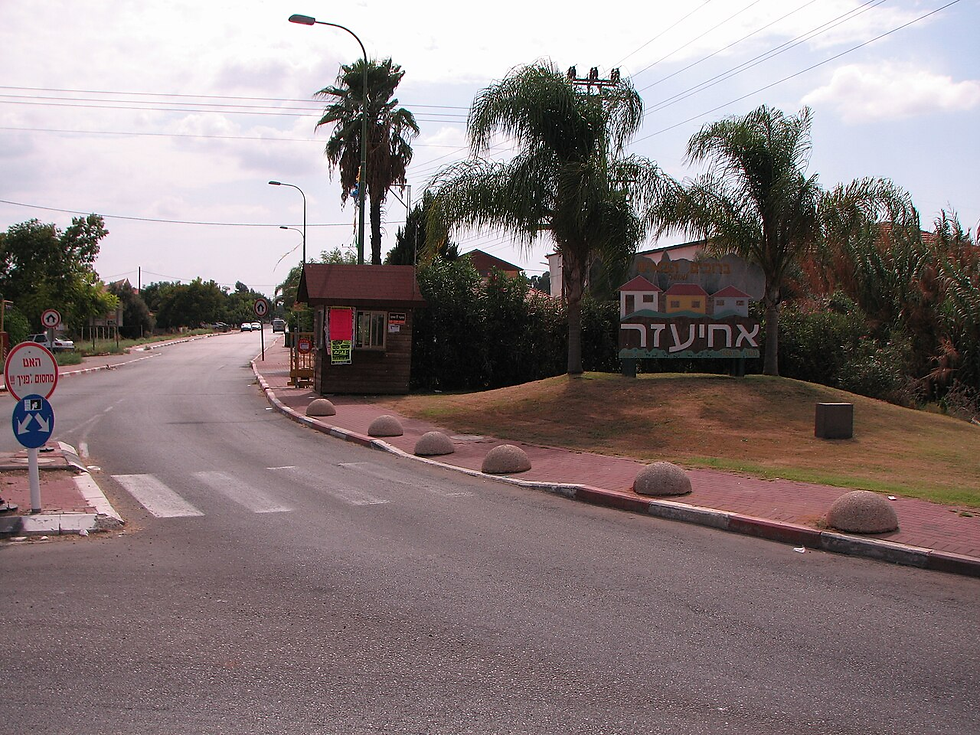
Ramat Pinchas is a neighborhood located within the municipal boundaries of the city of
Or Yehuda. It was previously known by the names "Givat HaMed" and "Givat Mordechai."
The neighborhood was established in 1952 on the lands of the depopulated Palestinian village of al-Khayriyya in the Jaffa area, as a settlement designated for immigrants from Libya and Iraq, from the towns of Mabrouk, Kafr Ana, al-Saqiya, and Huriya, on lands belonging to the Development Authority. By the end of 1954, the settlement committee announced the expansion of the project and the construction of independent residential units with attached farms, through the Rassco company. The settlement consisted of about 150 residential units, and was named after David Zvi Pinkas, one of the leaders of the "Mizrahi" movement and the state's second Minister of Transportation. In 1955, the neighborhood was connected to the electricity grid.
Until the early 1970s, the neighborhood was considered a religious settlement, and entry into it was forbidden on Saturdays and holidays. This later changed, and today it is home to residents from diverse backgrounds. At the start of 1996, a zoning plan was approved allowing the neighborhood to double in size toward the west, but this expansion has not been carried out to date.
The settlement faced financial difficulties in 1969, after which a proposal was made to annex it to Or Yehuda, but it was not implemented at the time. In 1971, Yehezkel Kazaz proposed establishing a union of towns to jointly provide certain municipal services between Or Yehuda, Ramat Pinchas, Nevei Monosson, and Yehud, but this proposal was also never realized. In 2003, the committee for merging local authorities recommended annexing the neighborhood to Or Yehuda, but the residents opposed this and the recommendation was not implemented. At the start of 2008, the Efal Regional Council was dissolved, and Ramat Pinchas was annexed to the Or Yehuda municipality, along with all the areas located south of Route 461. In July 2019, during a wave of fires in Israel, five houses in the neighborhood burned down.
Sources:Due to the scarcity of Arabic sources, the following Hebrew sources were relied upon:
The settlement's official website
Israeli Central Bureau of Statistics
Information on the village of al-Khayriyya from the Palestine Remembered website.
Comments